Table of Contents
Introduction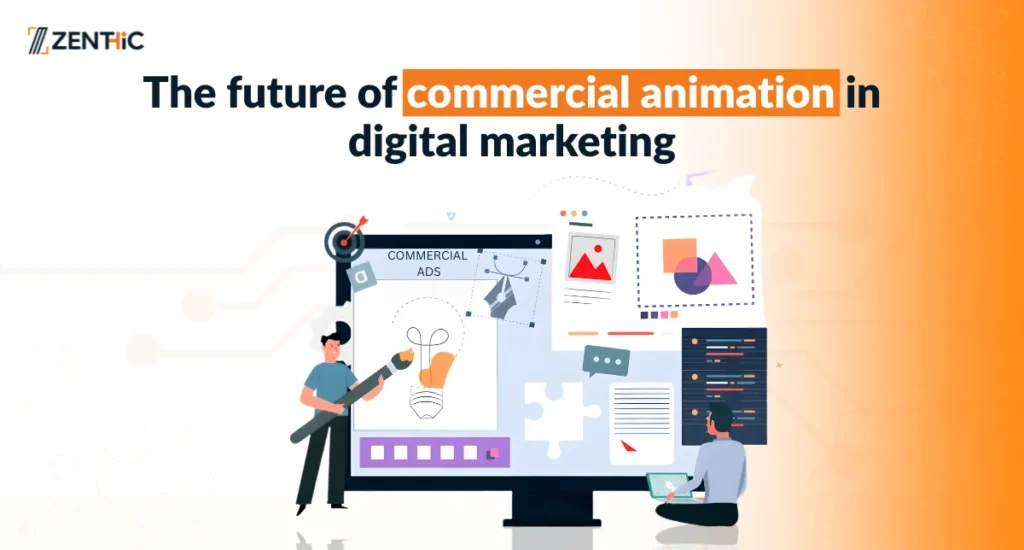
With the rapid evolution of digital marketing, brands now require more than just static images to remain visible. One of the most effective methods for capturing attention and conveying ideas interestingly and clearly is commercial animation. Animation helps brands communicate more quickly, intelligently, and creatively, whether it’s through animated ads, explainers, or short social media clips. This blog examines the evolution of commercial animation and what the future holds for brands seeking to stay ahead in a highly visual digital landscape.
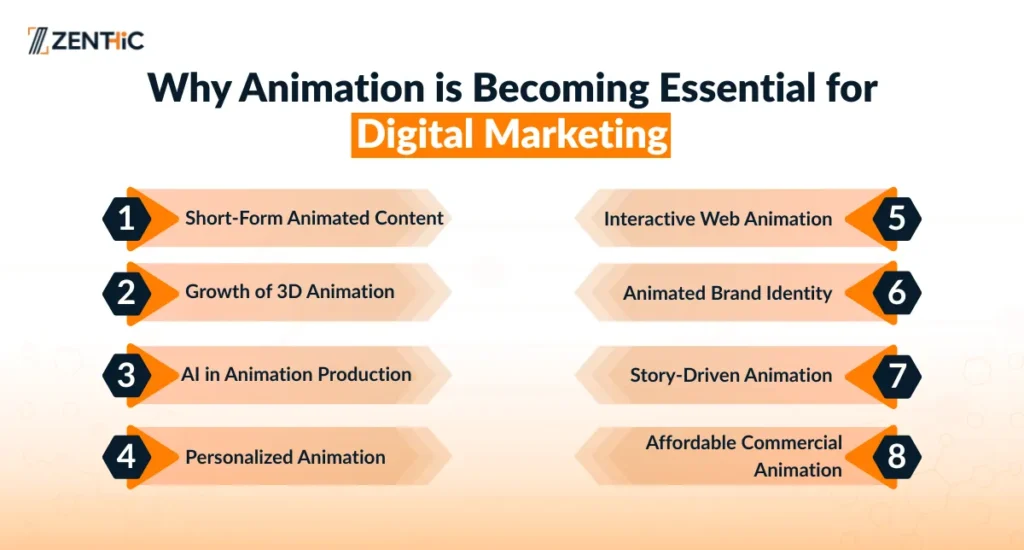
Why Animation is Becoming Essential for Digital Marketing
Commercial animation is no longer just for TV ads and long videos. It is now an important component of social media marketing, web narrative, product demonstrations, and branding. The rise of mobile-first audiences has made it a place where animation works much better than static images.
Users scroll quickly, and animations cause them to stop. They bring ideas to life through movement, emotion, and narrative, which static images cannot do. This movement is driving the brands to invest more in high-quality animated materials to retain their visibility and engagement.
Another method that can be used to boost content performance is through brand animation, which is one of the essential techniques for creating memorable customer experiences.
1. Short-Form Animated Content
Short-form videos have become a crucial component of content consumption with the emergence of platforms like Instagram, TikTok, YouTube Shorts, and Facebook Reels. For brands, this means creating engaging 5–10 second animations that:
- Highlight product features
- Deliver benefits quickly
- Show brand personality
- Increase watch time
Short-form animation is cost-effective and has a better chance of getting viral. In the future, this trend is expected to continue dominating the field of digital marketing.
2. Growth of 3D Animation
3D animation is becoming more affordable and user-friendly. Modern brands utilize 3D motion graphics to create futuristic product presentations, architectural visualizations, and immersive storytelling videos. More realistic textures, smoother transitions, and more lifelike movements are expected in the future. Three-dimensional animation will be utilized for:
- Simulated products
- Virtual Try-Ons
- Prototype animations
- Interactive advertising experiences
Brands that adopt 3D technology early will have a significant advantage in digital marketing, particularly in highly competitive niches.
3. AI in Animation Production
Artificial Intelligence is helping marketers create animations at a lower cost. Rather than wasting time working on one video, AI can help to:
- Generating scenes
- Creating voiceovers
- Automating transitions
- Designing characters
Although AI cannot substitute the creativity of a human, it streamlines the production process. This allows brands to produce more content within a shorter timeframe, which is a significant advantage of digital marketing that is fast-paced.
4. Personalized Animation
Personalization is the future of marketing. Brands will start producing animated videos with personalized greetings for individual users, product recommendations, or onboarding tutorials.
For example, an e-commerce brand may use a short animated video that shows customers how to use a newly purchased product. Personalization is an effective way to enhance trust, increase retention, and boost conversions.
5. Interactive Web Animation
The number of websites that are changing the old banners to interactive animated features is increasing, and they include:
- Respond to user movement
- Navigate the visitors across pages.
- Explain services
- Show product features
Interactive animation can be used to minimize bounce rates and improve the overall user experience. They also transform brands to appear modern, creative, and professional, which are essential for a digital presence.
6. Animated Brand Identity
Animation will be used in the future to enhance brand identity through the creation of:
- Animated brand mascots
- Motion-based logos
- Signature transitions
- Stylized character designs
Users can quickly identify a brand’s personality through animation, regardless of whether it is futuristic, playful, beautiful, or bold. Motions are more memorable than a still image, and animated identity elements will become a long-term asset.
7. Story-Driven Animation
The best way to reach audiences is through storytelling. In the coming years, the brand will utilize short-story-based animated campaigns to humanize its marketing message. These stories may highlight:
- Customer problems
- Brand values
- Product use cases
- Emotional journeys
Stories generate emotional bonds, and these emotional bonds create conversions.
8. Affordable Commercial Animation
With the ongoing development of software and production tools, animation is becoming more affordable to small and medium-sized businesses. This low cost will enhance competition and force brands to concentrate on quality, creativity, and originality.
Conclusion
The future of commercial animation in digital marketing is bright, dynamic, and full of promise. Animation will continue to transform the way brands deliver online messages through short-form videos, 3D images, and AI-enabled creation, as well as interactive website features.
Working with a reputable company ensures that your animations are of high quality, on-brand, and delivered on time, enabling you to stand out in a crowded digital market. Brands that carefully utilize animation may increase interaction while also strengthening their identity and telling their story.
Since the animation is still developing, brands can choose more creative approaches than ever before, and they can do so with either short-form visuals or more sophisticated 3D movements. These developments are helping marketers build stronger relationships and convey messages more memorably. Methods such as boosting engagement with animation, exploring the role of modern commercial animation, or simply selecting a 2D or 3D animation contribute to creating more digital content.