Table of Contents
Introduction- What Is Performance Marketing?
- Why Performance Marketing Matters?
5 Key Channels Used in Performance Marketing- 1. Search Engine Marketing
- 2. Social Media Advertising
- 3. Affiliate Marketing
- 4. Native Advertising
- 5. Content Marketing
- How Performance Marketing Works: Step-by-Step
- 1. Set Clear Goals
- 2. Identify the Right Audience
- 3. Choose the Best Channels
- 4. Create High-Quality Ad
- 5. Set Up Tracking Tools
- 6. Launch and Monitor Campaigns
- 7. Optimize for Best Results
- 8. Scale What’s Working
- Benefits of Performance Marketing
- 1. Cost Efficiency
- 2. Highly Measurable
- 3. Lower Risk
- 4. Better ROI
- 5. Scalability
- Who Should Use Performance Marketing?
- Conclusion
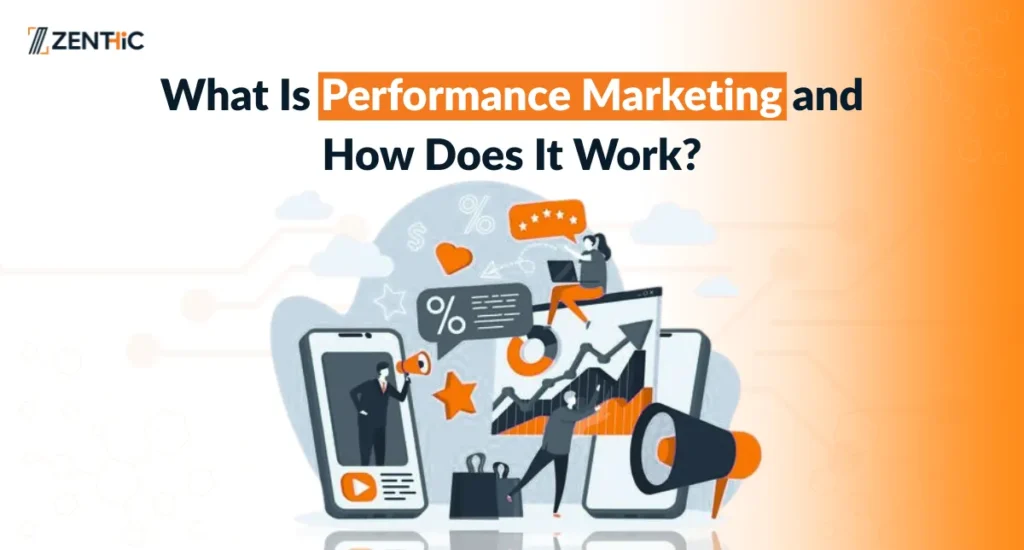
The concept of digital marketing has transformed, and the brands are no longer willing to rely on assumptions about which campaigns are effective. They want clear performance indicators, measurable growth, and reliable outcomes. This is where performance marketing comes in. Businesses do not pay to be seen as easily as they would pay to get a user to take a specific action, such as clicking, registering an account, or buying something. This result-oriented business model has become one of the most efficient and reliable marketing strategies of modern business.
What Is Performance Marketing?
Performance marketing is a data-driven online marketing approach in which advertisers are only charged when a user takes a specified action. These actions may include:
- Clicking an ad
- Subscribing to a newsletter
- Submitting a form
- Downloading an app
- Making a purchase
Performance marketing gives marketers more control, less risk, and higher returns because payments are based on results rather than on exposure. It is efficient for businesses that desire quantifiable growth, scalable campaigns, and optimal expenditure.
Why Performance Marketing Matters?
Traditional marketing focuses on reach, impressions, and brand visibility. However, today’s brands are seeking campaigns that can provide measurable results. The performance marketing assures:
- You can track every click, conversion, and sale
- Campaigns can be scaled based on performance.
- Wasted ad spend is minimized.
- You learn more about customer behavior.
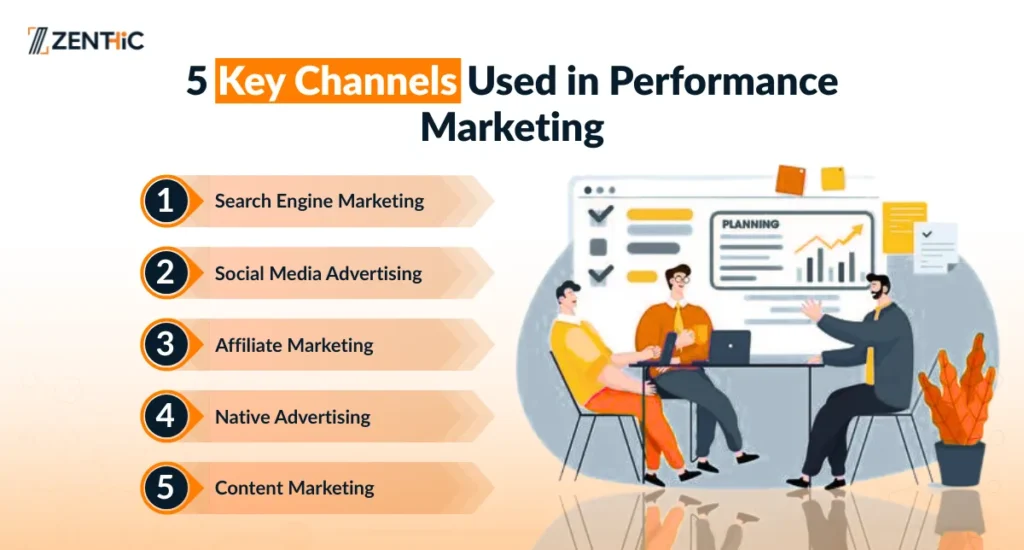
5 Key Channels Used in Performance Marketing
A variety of digital channels also drive performance marketing, helping brands reach their audience, monitor performance, and convert users into customers. The following are some of the most effective channels:
1. Search Engine Marketing
Paid search ads appear on Google or Bing, and advertisers pay either per click or per action. This is the most appropriate channel to reach high-intent users.
2. Social Media Advertising
Social media platforms such as Facebook, Instagram, TikTok, and LinkedIn enable more accurate targeting of audiences and conversion-oriented campaigns.
3. Affiliate Marketing
Influencers or publishers collaborate with brands under the agreement to earn a commission, such as a sale or a lead.
4. Native Advertising
Banner ads, retargeting ads, and in-app native ads are displayed on websites and apps. Advertisers pay only for measurable actions such as clicks or conversions rather than for impressions.
5. Content Marketing
Blogs and landing pages optimized for SEO can also be incorporated, as long as they align with conversion objectives and are monitored with analytics.
How Performance Marketing Works: Step-by-Step
The process of performance marketing is systematic, ensuring that all activities are quantifiable and ROI-based. Each stage is clearly outlined below:
1. Set Clear Goals
Establish the behavior that will be considered a success, e.g., a purchase, form submission, or lead generation.
2. Identify the Right Audience
Identify your ideal customers, understand where they spend time online, and determine what motivates their behavior
3. Choose the Best Channels
Depending on your target audience, choose platforms such as Google Ads, Facebook Ads, affiliate networks, or display partners.
4. Create High-Quality Ad
Write effective advertisement texts, images, and calls-to-action (CTAs) that motivate users to act accordingly.
5. Set Up Tracking Tools
Measure clicks and conversions in real time using pixels, UTM parameters, tracking links, and analytics platforms.
6. Launch and Monitor Campaigns
Monitor key metrics as CPC, CPL, CPA, ROAS, and conversion rates.
7. Optimize for Best Results
Optimize targeting, enhance creatives, refine landing pages, and adjust bids based on performance data.
8. Scale What’s Working
Focus your budget on the ads that perform well, and temporarily pause the ones that don’t, so your money is used more effectively.
Benefits of Performance Marketing
Brands use performance marketing for its ability to deliver measurable, cost-effective, and scalable outcomes. The following are some of its best benefits:
1. Cost Efficiency
Only meaningful user actions are paid. No money is spent on impressions that do not convert into sales.
2. Highly Measurable
All activities are tracked, analyzed, and evaluated.
3. Lower Risk
Payments are based on outcomes, thereby minimizing financial risks for businesses.
4. Better ROI
Data-informed decisions ensure each dollar is spent on growth.
5. Scalability
Effective campaigns can be easily scaled based on performance feedback.
Who Should Use Performance Marketing?
Performance marketing can help you achieve much faster outcomes, whether you are a small business or a developing company. It is effective especially when it comes to:
- E-commerce brands
- Service-based businesses
- Startups
- SaaS companies
- Local businesses
- Agencies
Performance marketing is one of the best strategies you can invest in if your business values fast results, accurate tracking, and budget control.
Conclusion
Performance marketing has revolutionized the digital advertising world by offering a smarter, more responsible approach for brands. Businesses no longer spend money on unmeasurable exposure but on quantifiable success. Performance marketing enables companies to make data-driven decisions, rather than relying on assumptions, leading to predictable and measurable outcomes.
And when you collaborate with a reliable performance marketing company, the outcomes are even more predictable and scalable, as you will have the support of professionals who can turn data into growth. Performance marketing is one of the most effective strategies for growing your business, whether you run a small business or a large enterprise, in today’s digital world.