Table of Contents
Introduction
The development of mobile apps is now an essential part of the digital transformation. Startups, businesses, and enterprises use mobile applications to access users, enhance interaction, and promote development. However, the development of a mobile application remains a challenging and difficult procedure for some users.
In this blog, we explain what mobile app development really means, why it is important for businesses, and discuss the key steps involved in the development process. This guide will help you determine whether you are planning your first app or simply want to understand how mobile apps are built.
What Is Mobile App Development?
The development of mobile apps is the procedure of developing software applications that will be executed on the mobile phone (smartphone and tablet). These applications are mostly developed on Android and iOS platforms, and are designed to bring a smooth, easy-to-use, and interactive experience to users.
Mobile apps can be categorized into:
- Native applications (created on the Android or iOS platform).
- Cross-platform applications (single written code runs on multiple platforms).
- Hybrid applications (apps written in a web-based application and carried in a mobile shell).
Why Mobile App Development Is Important for Businesses
The development of mobile applications is not only focused on the creation of an app, but it is also interested in addressing user problems, enhancing accessibility, and creating digital value over time. This is why it is necessary to know the process of development before starting a project.
Mobile applications help businesses in:
- Reach users directly on their devices
- Enhance customer service and retention.
- Optimize operations and services.
- Strengthen brand presence.
- Create new sources of revenue.
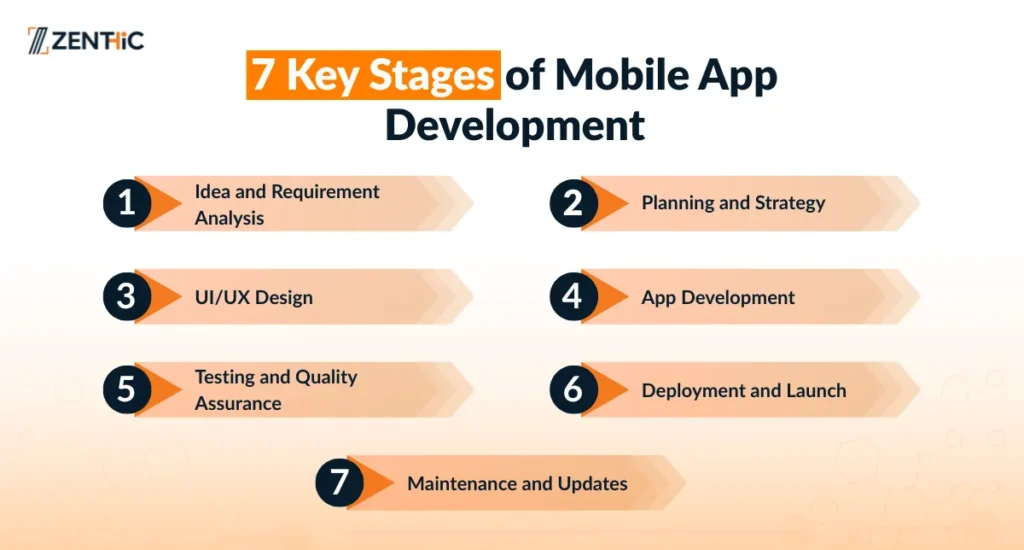
7 Key Stages of Mobile App Development
The development of the mobile app is a systematic process. All the stages are significant in making the app user-friendly, reliable, and even successful in the long run.
1. Idea and Requirement Analysis
Every successful application begins with a good idea. At this stage, the focus is on understanding:
- The purpose of the app.
- Target audience.
- Core features and functionality.
- Business goals and KPIs.
This stage helps eliminate unnecessary features and sets a strong foundation for development.
2. Planning and Strategy
Once the idea is approved, the next step is planning. This phase is concerned with establishing the way an app will be developed, and this includes:
- Choosing the right platform (Android, iOS, or both).
- Deciding between native or cross-platform development.
- Defining app architecture.
- Creating a proper roadmap and timeline.
The next step is the process of identifying appropriate mobile app development services according to your technical and business needs.
3. UI/UX Design
Design is where the app is visually developed. UI/UX design focuses on:
- Creating user-friendly user flows.
- Designing wireframes and prototypes.
- Ensuring consistent branding.
- Improving accessibility and usability.
A well-designed app enhances user satisfaction and lowers the bounce rates. However, bad design may lead users to drop the app in a short time, regardless of the power of the features.
4. App Development
App development is the primary implementation phase where the app is created. It includes:
- Frontend development (user interface).
- Backend development (servers, databases, APIs).
- Integration of third-party services.
- Providing security measures.
Developers follow the code standards and best practices to maintain performance, scalability, and stability. Modern approaches are frequently adopted to enable flexibility and ongoing enhancement in the process of development.
5. Testing and Quality Assurance
Testing is an important stage that checks whether the app is working properly. It involves:
- Functional testing.
- Performance testing.
- Security testing.
- Compatibility testing across devices.
This phase is useful in the detection of bugs, usability, and performance gaps during pre-launch. A well-tested application will provide a more seamless user experience and minimize the problems after launch.
6. Deployment and Launch
Once the testing period is completed, the next step is: app ready to launch. During this stage, the app is ready, and users can download the app and use it without any problem. This stage includes:
- App store optimization (ASO)
- Creating app listings and descriptions.
- App Store and Google Play specifications.
- Making the app live for users
An effective launch strategy is useful in enhancing visibility and increasing downloads. After approval, the application is easily accessible to users.
7. Maintenance and Updates
The development process does not end after the app has been launched. Maintenance is one of the most important things that should be maintained to make sure that the app is still working properly.
After launch developer:
- Fix bugs and crashes.
- Improve performance.
- Add new features.
- Ensure compatibility with OS updates.
User feedback plays a key role in shaping future updates. Regular improvements help keep the app competitive and relevant in a modern digital world.
Conclusion
Mobile app development is a process that transforms ideas into strong digital solutions, and it is well-organized and flexible. Learning about every phase of planning and design, development, and further maintenance will help you make better choices and prevent the mistakes that can be costly.
Whether you are creating an app for a start-up or you are expanding an enterprise solution, it is important to invest in the appropriate strategy and skills that will be successful in the long run. A well-designed application is one that is fulfilling the user’s expectations and helping the business grow. Finding the right development team is the first step in developing a successful mobile app. Companies usually prefer working with a reputable and trusted company that is aware of technology and the needs of the audience. The appropriate partner will take you through all phases of validation of the idea for long-term maintenance.