Table of Contents
Introduction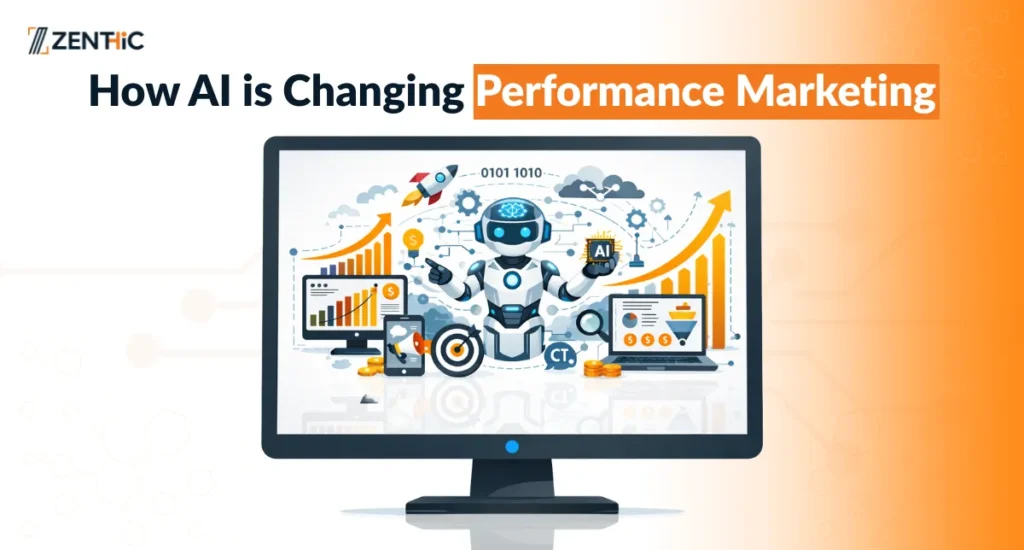
Performance marketing has always been focused on results: clicks, leads, conversions, and ROI. However, in the modern world, the methods of reaching these outcomes are changing rapidly. Artificial Intelligence (AI) is transforming the idea of performance marketing by making the campaigns much smarter, quicker, and more data-driven.
Automated bidding, predictive analytics, audience targeting, and real-time optimization are just a few examples of how AI helps marketers make more accurate and informed decisions. This blog explains how AI is transforming performance marketing and how marketers can use it effectively.
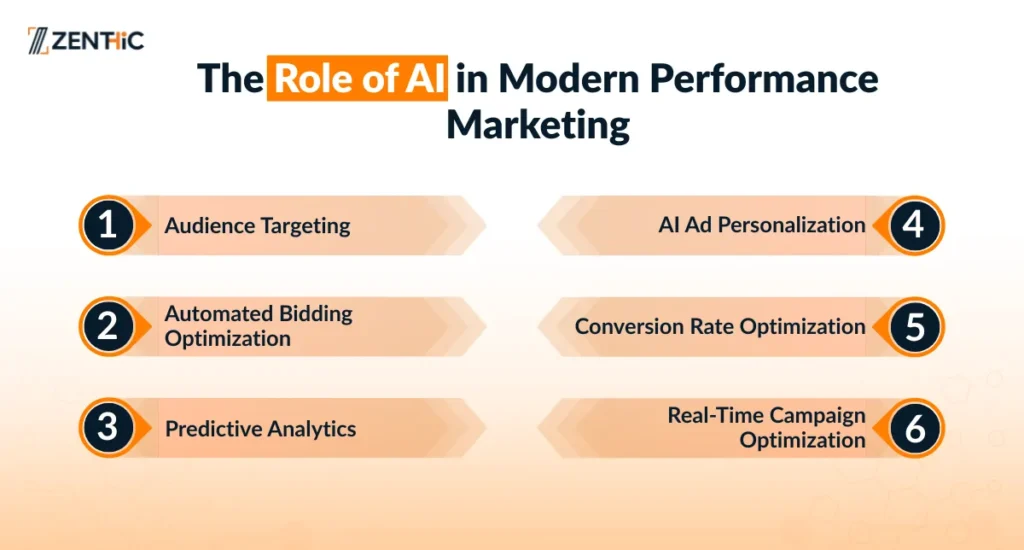
The Role of AI in Modern Performance Marketing
AI uses data, machine learning, and algorithms to analyze patterns and make accurate decisions. This is referred to as performance marketing. AI is capable of handling millions of data points, such as user behavior, device usage, ad engagement, conversion paths, and converting them into actionable insights.
Marketers can use AI to adjust campaigns instead of manually adjusting them.
- Optimize ads in real time.
- Identify high-intent users.
- Predict performance trends.
- Improve ROI with less wasted spending.
This transformation enables brands to become more strategic and creative, and AI performs execution and optimization.
Audience Targeting
Advanced audience targeting is one of the biggest ways AI is transforming performance marketing. Traditional targeting relies mainly on basic demographics and user preferences.
AI examines user behavior, including
- Browsing patterns.
- Purchase history.
- Engagement timing.
- Platform interactions.
AI can be used to build dynamic audience segments that are automatically updated. This targeting ensures that ads are shown to users who are most likely to convert, not just those who may be interested.
Automated Bidding Optimization
The process of manual bidding is time-consuming and inefficient. AI-based bidding algorithms are able to automatically adjust bids according to conversion probability, competition, and intent.
AI-based platforms such as Google Ads and Meta Ads are used to:
- Invest in high-performing campaigns.
- Minimize expenditure on low performing advertisements.
- Modify bids depending on time, equipment, and location.
This makes sure that your marketing budget is invested in the best place that will give you the highest return.
Predictive Analytics
Artificial intelligence doesn’t just analyze the past; it predicts the future. Predictive analytics assists marketers to predict:
- Which campaigns will perform best.
- Which users are likely to convert.
- When conversion rates may drop or rise.
The early detection of trends allows marketers to correct campaigns before they can decline. This proactive approach reduces risk and improves long-term ROI.
AI Ad Personalization
Another area in which AI is transforming the advertising process is customization and ad creation. AI can provide dynamic creative optimization instead of running a single version of an ad to everyone. AI-driven personalization assists brands in getting the right message to the right user at the right time.
AI can:
- Test multiple headlines, visuals, and CTAs.
- Target advertisements using user behavior.
- Automatically displays the best-performing creatives.
Conversion Rate Optimization
Conversion rate optimization (CRO) is one of the most important aspects of performance marketing, and it is becoming much more efficient with the help of AI. AI applications can be used to examine how users behave on landing pages, funnels, and apps to determine where they drop off.
With AI, marketers can:
- Test layouts and content automatically.
- Identify friction points in the marketing funnel.
- Optimize user journeys in real time.
This results in increased conversion and user experience without having to do manual testing all the time.
Real-Time Campaign Optimization
Speed is one of the most significant benefits of AI. Artificial intelligence systems work in real time, continuously learning and optimizing campaigns as they gather new data.
This means:
- Advertisements are modified in real-time according to performance.
- Weak areas are automatically stopped.
- An audience with high chances of conversion receives greater exposure.
Real-time optimization enables businesses to remain competitive in the rapidly moving digital environment.
Challenges When Using AI
Although AI has strong advantages, it is not going to eliminate human strategy. The quality of data, clarity of goals, and appropriate setup are the main pillars of AI.
Key considerations include
- Proper tracking and analytics.
- Clearly defined performance goals.
- Strategy and direction by human beings.
Artificial intelligence is most effective in collaboration with human skills, innovation, and business knowledge.
The Future of AI in Performance Marketing
AI will keep developing, and performance marketing will become more predictive, automated, and personalized. The early adopters of AI-driven strategies will have a competitive advantage because they will make faster and smarter decisions. The future is not about replacing marketers; it is about giving them smart tools that are able to scale results and eliminate inefficiencies.
Conclusion
The use of AI is not optional in performance marketing anymore; it is a competitive requirement. Artificial intelligence is transforming the process of planning, execution, and scaling campaigns by targeting audiences and making bids, as well as analytics and optimization. The application of AI allows marketers to spend less time on manual activities and more time on strategy, creativity, and growth; providing high level of performance with measurable results.