Table of Contents
Introduction- What is AI Automation?
- Benefits of AI Automation
- 1. Improved Efficiency
- 2. Reduced Costs
- 3. Data-Driven Decisions
- 4. Scalability
- 5. Higher Accuracy
- Challenges of AI Automation
- 1. High Investment Costs
- 2. Data Quality and Security Risks
- 3. Fear of Job Loss
- 4. Integration Challenges
- 5. Ethical and Transparency Issues
- Future of AI Automation
- 1. Hyperautomation
- 2. Human-AI Collaboration
- 3. Personalized Customer Experiences
- 4. Industry-Specific Solutions
- 5. Ethical and Responsible AI
- Conclusion
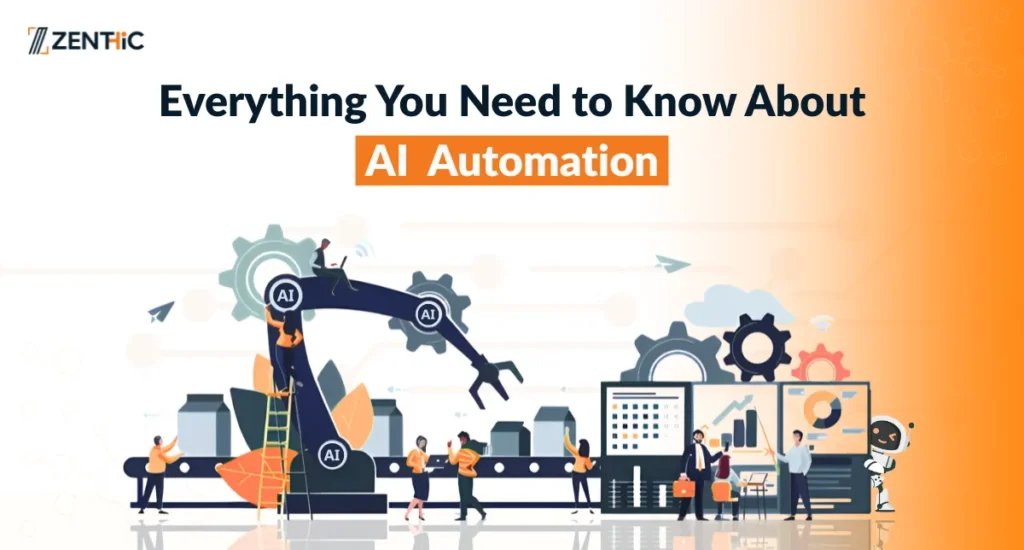
In today’s competitive digital world, organizations face pressure to achieve more with fewer resources. To meet this demand, many are turning to AI automation, which combines artificial intelligence and automation to perform tasks with minimal human effort. By partnering with a trusted company , businesses can implement intelligent automation solutions that simplify operations, minimize errors and enhance efficiency.
Unlike traditional automation that strictly follows preset rules, AI automation adapts and improves over time. It can handle repetitive tasks like data entry or invoicing, as well as more complex processes such as inventory management or dynamic pricing.
What is AI Automation?
AI automation refers to the integration of artificial intelligence (AI) with automation solutions to carry out tasks with minimal human involvement. Unlike traditional automation, which strictly follows fixed rules, AI automation leverages technologies such as machine learning, natural language processing (NLP) and data analysis to make decisions, adapt to changes, and improve over time. By analyzing data, recognizing patterns, and learning from continuous feedback, AI-powered systems become smarter and deliver more accurate and efficient results.
Benefits of AI Automation
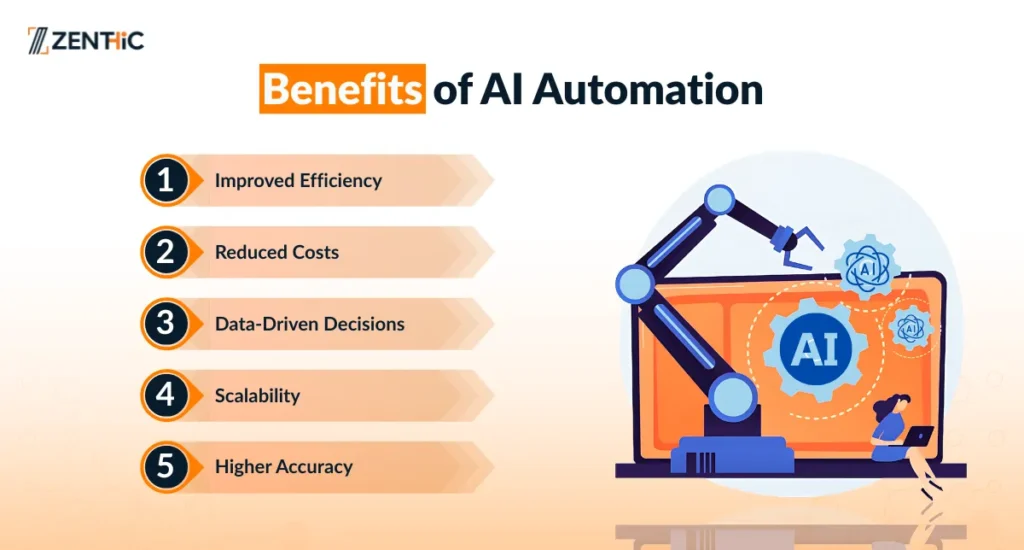
AI automation is altering how businesses are being conducted. Rather than spending hours working on repetitive tasks, businesses can now automate their operations and reduce expenses and make smarter decisions due to intelligent systems. The benefits of AI automation extend much further than saving costs; it helps businesses streamline their operations, make data-driven decisions and remain competitive in a fast-paced, digital world. Here are the five key benefits of AI automation every business should know:
1. Improved Efficiency
Among the largest benefits of AI automation is the possibility to perform tasks without getting tired. Whether it is a daily task or a highly-complicated workflow, AI accelerates routine tasks and removes unnecessary delays.
2. Reduced Costs
AI automation reduces the cost of operation by performing routine activities like data input, appointment or customer service requests. The saved resources can be invested in innovation and growth by the companies.
3. Data-Driven Decisions
AI automation doesn’t just follow instructions. It is a data-driven learner that detects patterns and offers insights that can guide the leaders to make superior and real-time decisions.
4. Scalability
The larger the business, the greater the operational requirements. AI automation is also scalable unlike the manual process, and it is able to handle a larger load of work without losing quality or efficiency.
5. Higher Accuracy
Human errors are a common feature in manual work. With AI-driven automation, nearly perfect accuracy is achieved when performing tasks such as reporting, invoicing or checking compliance to increase trust and reliability.
Challenges of AI Automation
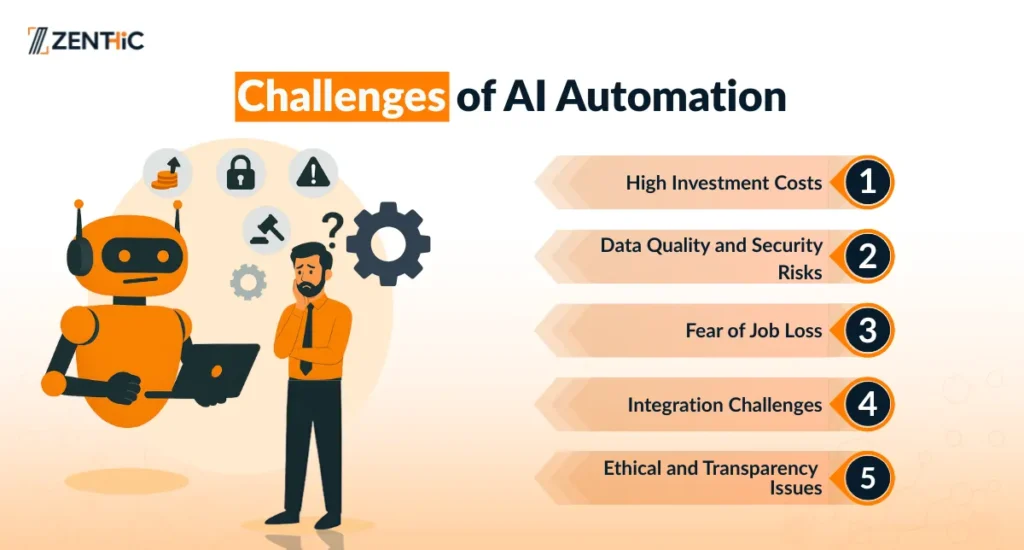
AI automation is revolutionizing industries by simplifying operations and enhancing efficiency, it also has a number of challenges that organizations should be able to deal with in order to achieve success. Here are five significant issues that companies have with AI automation.
1. High Investment Costs
One of the issues of AI automation is that it is very expensive to implement. The initial setup may require a budget as it may require investment in sophisticated software and the upgrading of IT infrastructure and the employment of experienced professionals. In the case of startups and small businesses, such cost can be a barrier, as it becomes more difficult to compete with bigger organizations with more resources.
2. Data Quality and Security Risks
High-quality and secure data is one of the largest obstacles in the automation of AI. Wrong decisions can be made because of poor-quality or incomplete data. Meanwhile,the risk of AI automation in terms of privacy, compliance, and cybersecurity is a factor in handling massive amounts of sensitive data.
3. Fear of Job Loss
One of the most common limitations of AI automation is the concern that it may replace certain jobs. Although AI also generates new positions in innovation and technology, the fear of displacement may foster resistance among the employees.
4. Integration Challenges
It is not always easy to introduce AI into the current workflow. AI automation has numerous drawbacks on many organizations attempting to implement new systems with older processes, or when teams require time and training to adjust.
5. Ethical and Transparency Issues
AI does not always justify the methods of its decisions. This uncertainty also leads to ethical issues that make it more difficult to establish trust and accountability when one bases their business decisions on the results provided by AI.
Future of AI Automation
The future of AI automation is defining the way businesses conduct their operations, innovate and compete in the digital era. With the advancement of intelligent automation, the future of work will be changed, and it will lead to massive digital change. These are the five directions the businesses should follow:
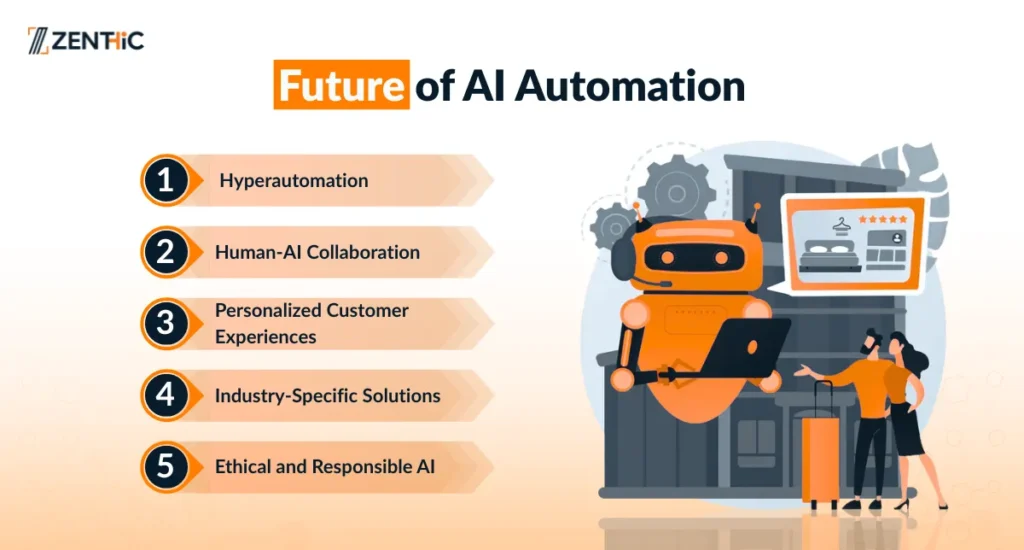
1. Hyperautomation
The application of AI automation will also move into hyperautomation, which involves several tools and technologies collaborating to automate the entire process. This will enable organizations to simplify operations, save money and open new frontiers of productivity.
2. Human-AI Collaboration
The future of AI automation is not human replacement but the ability to work smarter. The repetitive work will be handled by intelligent automation, and workers will be concentrated on solving problems, being creative, and strategizing, which will result in more effective working environments.
3. Personalized Customer Experiences
Customer experience will be more personalized as businesses automate using AI. With the help of AI-powered chatbots, forecasting analytics, businesses will apply automation to learn customer behaviour, predict their needs and provide them with quicker and more personalized solutions.
4. Industry-Specific Solutions
The appearance of AI automation will be industry-oriented innovation. In health, it will aid in diagnosis and patient management. In finance, it will enhance fraud detection. In retail, it will streamline the models of Supply chain management and pricing. The intelligent automation solutions will be customized to meet the growth of each industry.
5. Ethical and Responsible AI
The more AI is automated, the more it becomes the duty to apply it in an ethical manner. Businesses will prioritize explainable AI, data privacy and compliance to make automation, build trust and provide equitable and transparent results.
Conclusion
AI automation is no longer just a trend; it is transforming the way businesses operate. By integrating smart automation into daily workflows, companies can streamline processes, reduce errors and make smarter, data-driven decisions.
Beyond efficiency, AI automation is shaping the future of work, allowing employees to focus on creativity, innovation, and strategic tasks instead of routine operations. At the same time, businesses must address challenges like data quality, security and ethical considerations to fully realize its potential.
Today, businesses can remain competitive by embracing business automation and digital transformation to create innovative, resilient and future-ready operations. Explore our AI Automation Services to see how intelligent automation can empower your business and drive sustainable growth.