Table of Contents
Introduction
Android and iOS are not a technical choice, but it is a business decision. The platform you select may influence your application in terms of its reach, income, user experience, and future development. There are already millions of apps out there, so choosing the correct platform as the first step may save you time, money, and future headaches.
One of the first decisions any person who builds a mobile application has to make is whether to use Android or iOS. Both platforms dominate the mobile market, but they have different strengths, weaknesses, and audiences. In this blog, we will discuss the differences, helping you decide which platform supports your objectives as a developer, entrepreneur, or business owner.
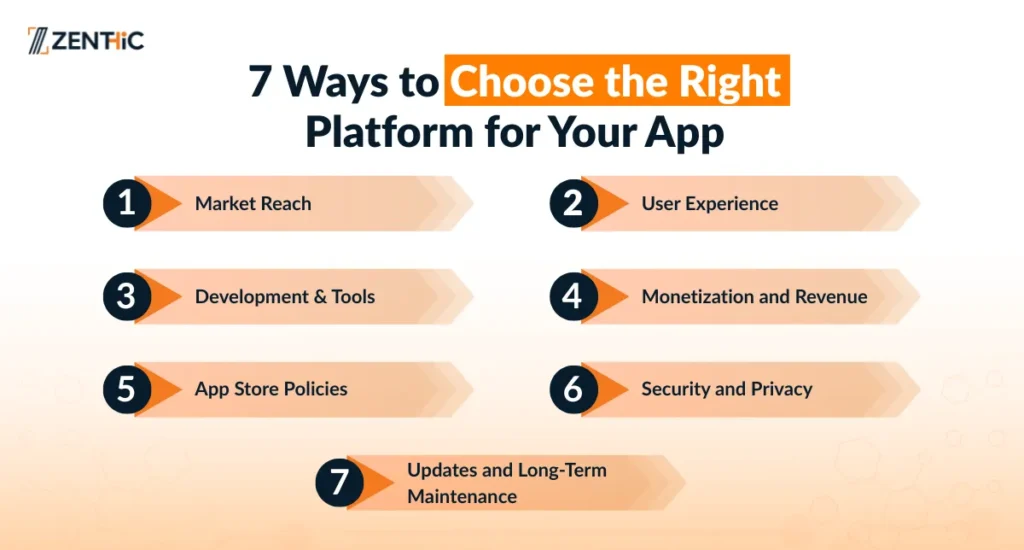
7 Ways to Choose the Right Platform for Your App
Here are 7 simple ways to choose the right platform for your app.
1. Market Reach
- Android has the most users in the world. It works on smartphones of various prices, from low-cost phones to high-end models. As a result, Android apps reach a larger audience, particularly in Pakistan, India, and Southeast Asia.
- iOS has a smaller global audience but is particularly popular in high-end markets such as North America and Western Europe.
If you want maximum visibility and downloads internationally, Android may be the better option, and if your goal is to target high-spending users, iOS often generates more revenue per user.
2. User Experience
User experience (UX) is a major part of platform choice. Android provides greater freedom to both users and developers. You may personalize layouts, features, and even system behavior. However, this independence may sometimes lead to inconsistent results across devices.
iOS maintains simplicity and control. Apple determines how things should look and function. This ensures that users have a clean, smooth, and predictable experience. iOS is frequently a safer choice if your software relies significantly on performance and design consistency.
3. Development & Tools
- Kotlin or Java are commonly used to develop Android apps, whereas Swift is used to develop iOS apps. Android development can take longer because your program needs to run on various screen sizes and device types. It requires more time to test.
- iOS development is generally faster because there are fewer devices to support. Additionally, problems are fixed easily, and updates are simpler to handle.
- You can more effectively plan time and money if you are aware of the entire mobile app development process and all of its phases.
4. Monetization and Revenue
One of the most practical differences is how the apps generate money on both platforms. iOS users are more likely to spend on paid apps, in-app purchases, and subscriptions. Even with fewer users, many businesses make more money with iOS.
Android users are also capable of downloading more applications, but most apps are free and ad-supported, which can restrict revenue, unless you have an excellent monetization strategy.
If your business model is based on premium services, subscriptions, or in-app purchases, iOS might be more beneficial in terms of ROI. Android could be a better choice in case you have a large audience and aim to scale to volume-based or ad-based revenue.
5. App Store Policies
Publishing an app to users is another key consideration.
- Android is often quicker for publishing an app. Google Play has an easier approval process and registration fee.
- Apple’s App Store is stricter. The process of reviewing the apps is more time-consuming, and the guidelines are more elaborate. But it is also an increase in quality and improved trust among users.
This means Android can be quicker to market, while iOS may take longer but it also results in higher quality.
6. Security and Privacy
Security and privacy matter for both users and businesses. Apple has reputable privacy and security regulations. Apps are also thoroughly checked, and data security is a priority. iOS is considered safer because its ecosystem is closed, there are strict rules follow, and third parties have limited access. In the case of applications that deal with sensitive data, iOS might offer a competitive advantage in terms of trust and integrated security.
Android also offers high-security levels, such as Google Play Protect, yet it is open-source and therefore more prone to malware usage when it is not connected to official application stores.
7. Updates and Long-Term Maintenance
Android updates are determined by the phone manufacturers, which may lead to delays. Old versions have numerous users who remain on them. All supported devices receive iOS updates simultaneously.
Which Platform Should You Choose?
Now with all this information in mind, how do you make your decision?
Choose Android if you want:
- A wider global audience
- Stronger customization and flexibility
- Lower upfront development cost
- Faster app publishing
- Extensive coverage in new markets.
Android is the best when it comes to extensive market reach and experimentation.
Choose iOS if you want:
- Higher revenue potential
- Consistent and polished UX
- Strong security and controlled environment
- Easier testing and updates
- Premium market segment
iOS is ideal when you are more concerned with quality, revenues per user, and security. Today, most modern businesses begin with a single platform and then, over time, add the other one, leveraging initial experience to make cross-platform success.
Conclusion
Android versus iOS is not only a matter of technology but also a matter of doing the right thing for your business. Target audience, budgets, growth strategies, and your long-term vision also contribute to determining what platform is appropriate for you.
Android is the best option when your interest is in a broader scope and increased flexibility, whereas iOS is better when your business seeks greater stability, excellent security, and revenue potential per user. Many successful apps begin with a single platform and add new features as the product becomes larger and the needs of the users change.
A digital transformation agency may assist you in preventing expensive failures and ensuring that you align the app strategy with the appropriate platform, current technologies, and solutions that can scale in the future. It takes the right direction to make sure that your app is not only released but is designed to grow, operate, and thrive within a competitive digital environment.
Ultimately, the most suitable platform is the one that helps you achieve your objectives in the present and continue to grow your business in the future.